
Freight class is the pricing language for most LTL shipments, and it can change your final invoice if it is wrong.
The four factors are density, stowability, handling, and liability. Density drives many day-to-day estimates.
You estimate freight class by measuring, weighing, calculating density, then confirming the NMFC item and freight class code.
A mixed pallet usually prices at the highest class on that pallet, so segregation and packaging choices matter.
A 3PL can reduce reclass risk by tightening dims, packaging, and paperwork before freight hits the dock.
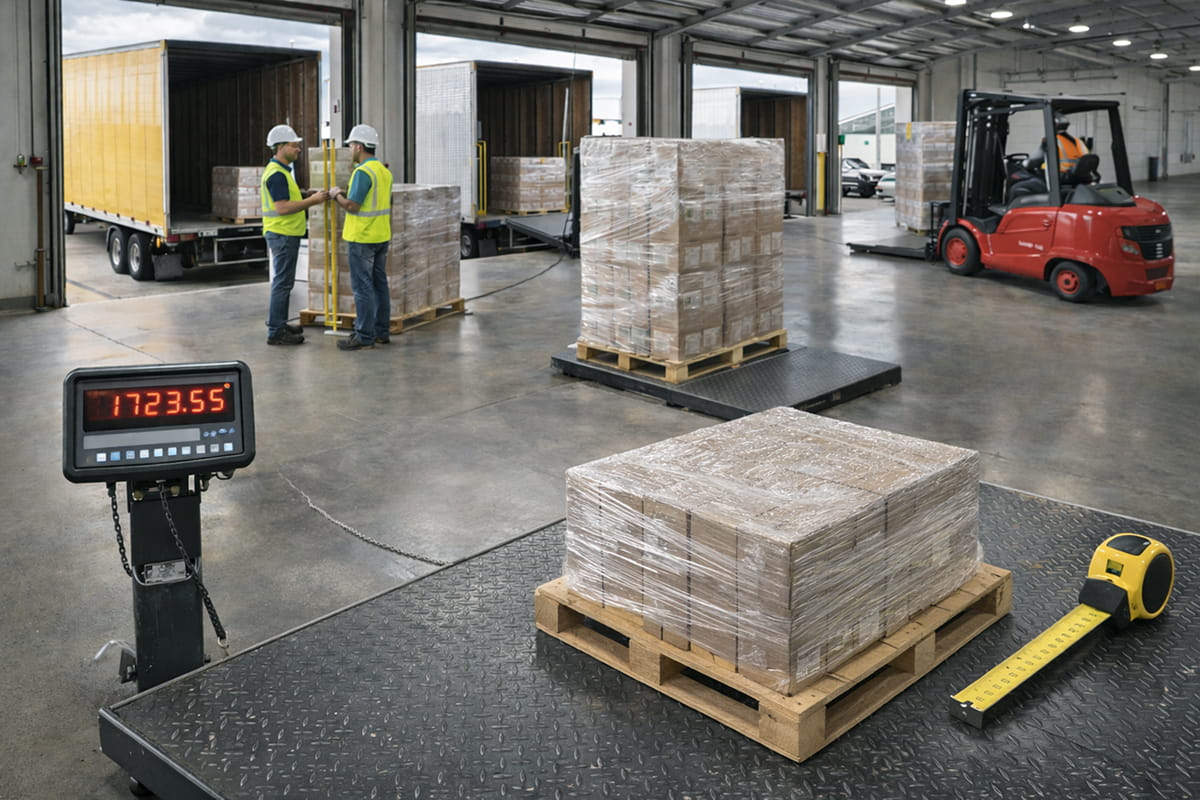
A shipper calls us after getting a “great” LTL quote. The freight moves; the invoice lands; and the rate jumps.
In most cases, the problem is not the carrier. The problem is the BOL. The freight class does not match the freight as it ships.
Freight class is not busywork. Freight class is a cost lever. It also protects your schedule because reclass reviews can slow down a shipment.
This guide explains what freight class is, how the system works, and how your team can estimate it with fewer surprises.
Freight class is a standardized LTL classification system that groups commodities into 18 classes from 50 to 500. Lower classes usually cost less because the freight ships “easier.” Higher classes usually cost more because the freight ships “harder.”
Freight class connects to the NMFC (National Motor Freight Classification) system. The NMFC assigns item numbers and freight class codes that carriers use to price, handle, and audit LTL shipments. For official classification tools and NMFC lookup options, start with NMFTA’s ClassIT tool.
Shippers use freight class for two main tasks:
To price an LTL shipment during quoting
To describe the shipment correctly on a Bill of Lading (BOL)
Freight class affects cost because it signals how much trailer space a shipment uses and how much risk the carrier takes.
Freight class also drives conflict because a carrier can reweigh, remeasure, and reclass after pickup. If the shipment does not match the stated class, you can see:
Reclassification fees
Higher linehaul charges
Accessorial changes
Billing delays that slow cost reporting
If your team shops rates across multiple carriers, freight class keeps the comparison fair. It gives everyone the same baseline.
Think of freight class as a “transportability score.” The score comes from four inputs.
Density is weight per cubic foot. Higher density often maps to a lower class because the freight uses space efficiently.
Stowability answers: “How well does this freight fit with other freight?”
Odd shapes, long items, or items that cannot stack can push class higher.
Handling answers: “How hard is it to move?”
Fragile items, items that need special equipment, or items with awkward packaging can push class higher.
Liability answers: “How likely is loss or damage, and how costly is that loss?”
High-value items, theft-prone items, or damage-prone items can push class higher.
Density gets the spotlight because it is measurable and fast. The other three factors explain why two items with similar density can still rate differently.
Here is the process we use when we help customers tighten up LTL quoting.
Start with the unit that actually ships:
Pallet
Crate
Carton (if loose loaded)
Slip sheet (if your carrier accepts it)
Do not estimate off the product alone. Estimate off the packaged unit.
Measure the longest points including packaging and overhang:
Pallet footprint
Corner boards
Stretch wrap “belly”
Top caps
Small inches matter because cubic feet compounds quickly.
Use the real weight including the pallet. If you ship multiple pallets, weigh each if they vary.
Cubic feet = (L × W × H in inches) ÷ 1,728
Density = weight (lb) ÷ cubic feet
Most shipping teams use a density guideline chart to get an initial class range, then confirm against the NMFC item.
Here is a quick density-based reference that many teams use for early estimates:
| Density (lb/cu ft) | Common estimate class |
|---|---|
| 50+ | 50 |
| 35–50 | 55 |
| 30–35 | 60 |
| 22.5–30 | 65 |
| 15–22.5 | 70 |
| 13.5–15 | 77.5 |
| 12–13.5 | 85 |
| 10.5–12 | 92.5 |
| 9–10.5 | 100 |
| 8–9 | 110 |
| 7–8 | 125 |
| 6–7 | 150 |
| 5–6 | 175 |
| 4–5 | 200 |
| 3–4 | 250 |
| 2–3 | 300 |
| 1–2 | 400 |
| <1 | 500 |
This table helps you avoid “wild guess” classes. It does not replace the NMFC item, but it keeps your quote in the right neighborhood.
This is where accuracy lives.
You confirm the commodity classification using:
Manufacturer guidance (often the fastest path)
Your 3PL’s classification support
NMFTA resources and tools, including ClassIT
If your product mix changes, confirm again. A new material, a new pack-out, or a new retail channel can change the correct listing.
Your BOL should match what sits on the dock:
Correct NMFC item (when available)
Correct freight class
Piece count and handling unit type
Accurate weight and dimensions
Notes for stackability or special handling (when true)
If the BOL and the freight disagree, the freight wins.
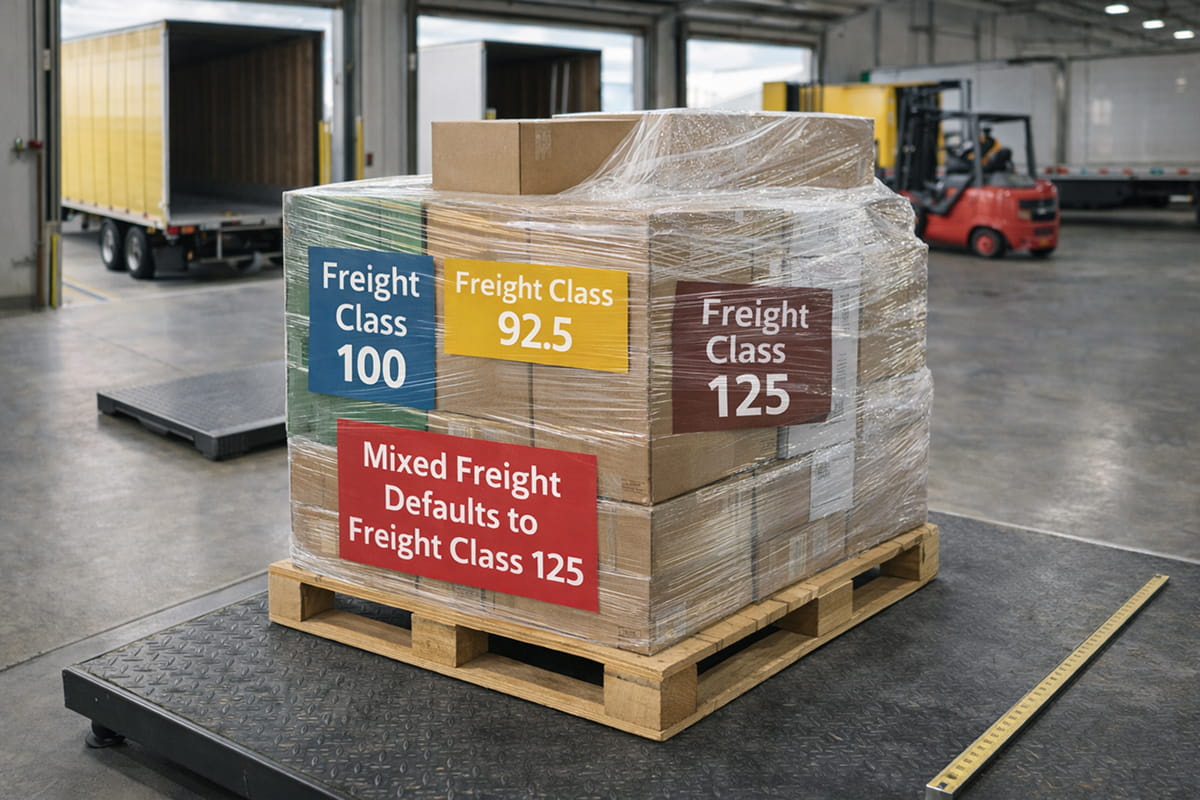
A common billing surprise comes from mixed freight.
If you place items with different classes on one pallet, many carriers will rate the pallet at the highest class present because that item sets the handling and liability profile.
If cost control matters, you can:
Separate high-class items onto their own pallet
Repack to improve stackability
Use stronger cartons to reduce handling risk
Avoid overhang that creates stowability limits
This is where repacking and cross-docking support can turn into real freight savings, not just cleaner ops.
“Furniture is class 125.” Sometimes. Not always. Packaging and density can move that number.
A new carton, a new pallet, or a new bundling method can change cubic feet fast.
A 40–60 lb difference can push density across a pricing line.
Carriers audit. Reclass happens. The invoice increases and the relationship takes a hit.
The NMFC item number and the freight class are related, but they are not the same field. Treat them as separate and fill both correctly when you have them.
Freight class is pricing. Compliance is safety. Your shipping process touches both.
If your freight needs special securement or has unique handling risk, it helps to align warehouse practice with federal guidance on cargo securement. FMCSA publishes cargo securement guidance that helps teams understand general requirements and standards in plain language.
That kind of alignment reduces claims, damage, and service failures, which also protects your freight class assumptions over time.
At Derby, we treat freight class as part of execution, not a last-second admin step.
When customers loop us in early, we help with:
Packaging and pallet build recommendations that improve density and stackability
Quote hygiene so rates reflect real dims and real handling units
BOL cleanup so class, weight, and description match the shipment
LTL strategy choices that fit service goals and cost goals
If your team wants a refresher on LTL fundamentals, start with our FTL and LTL shipping services overview. If you want a clean way to compare quotes and spot hidden accessorial risk, use our breakdown on how freight shipping quotes work.
