What Is the Difference Between Floor-Loaded and Palletized Freight?
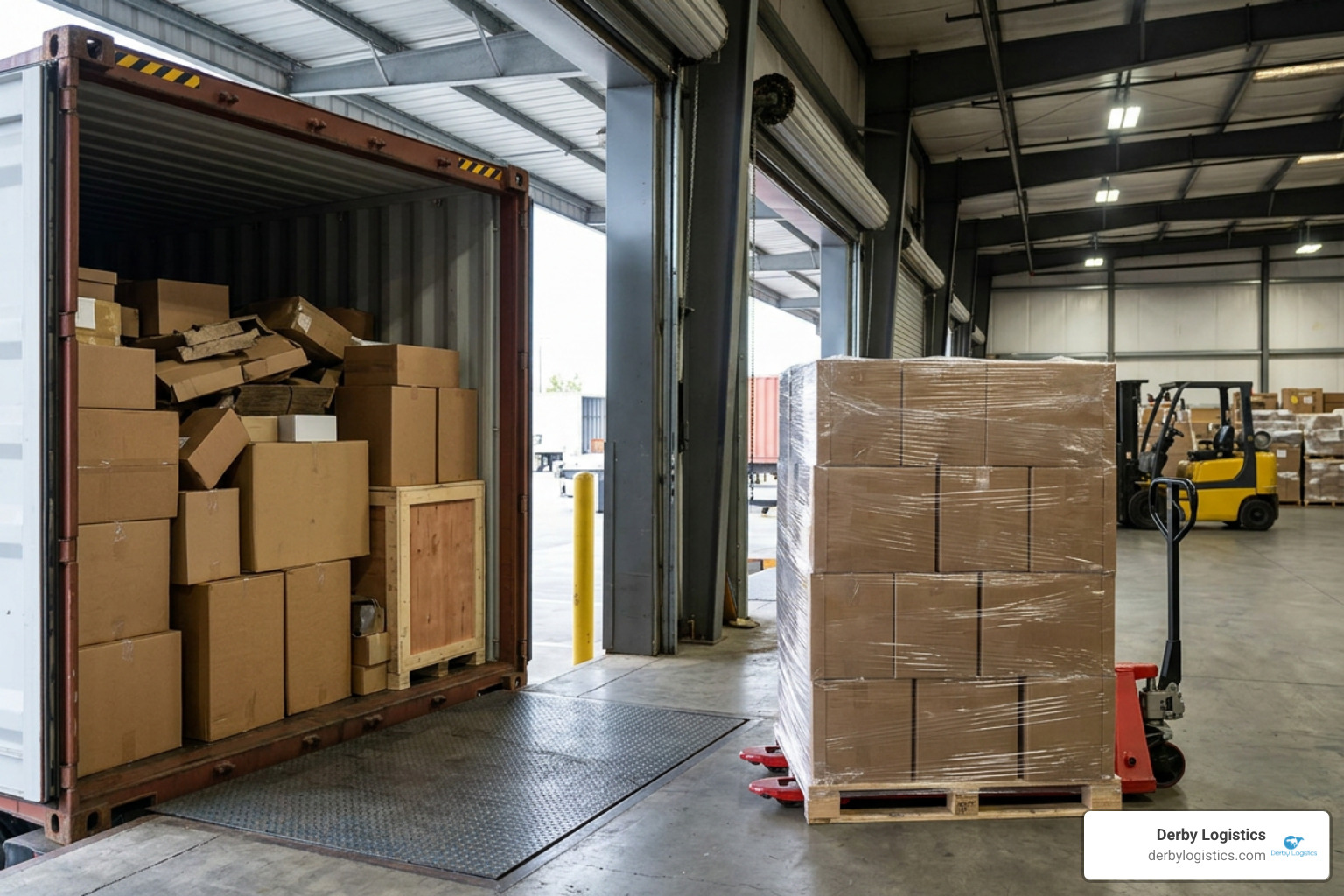
When moving freight across regional supply chains or nationwide corridors, how you load a dry van, intermodal box, or ocean container dictates your shipping costs, handling speed, and cargo safety. The two fundamental approaches are
floor-loaded freight and
palletized freight.
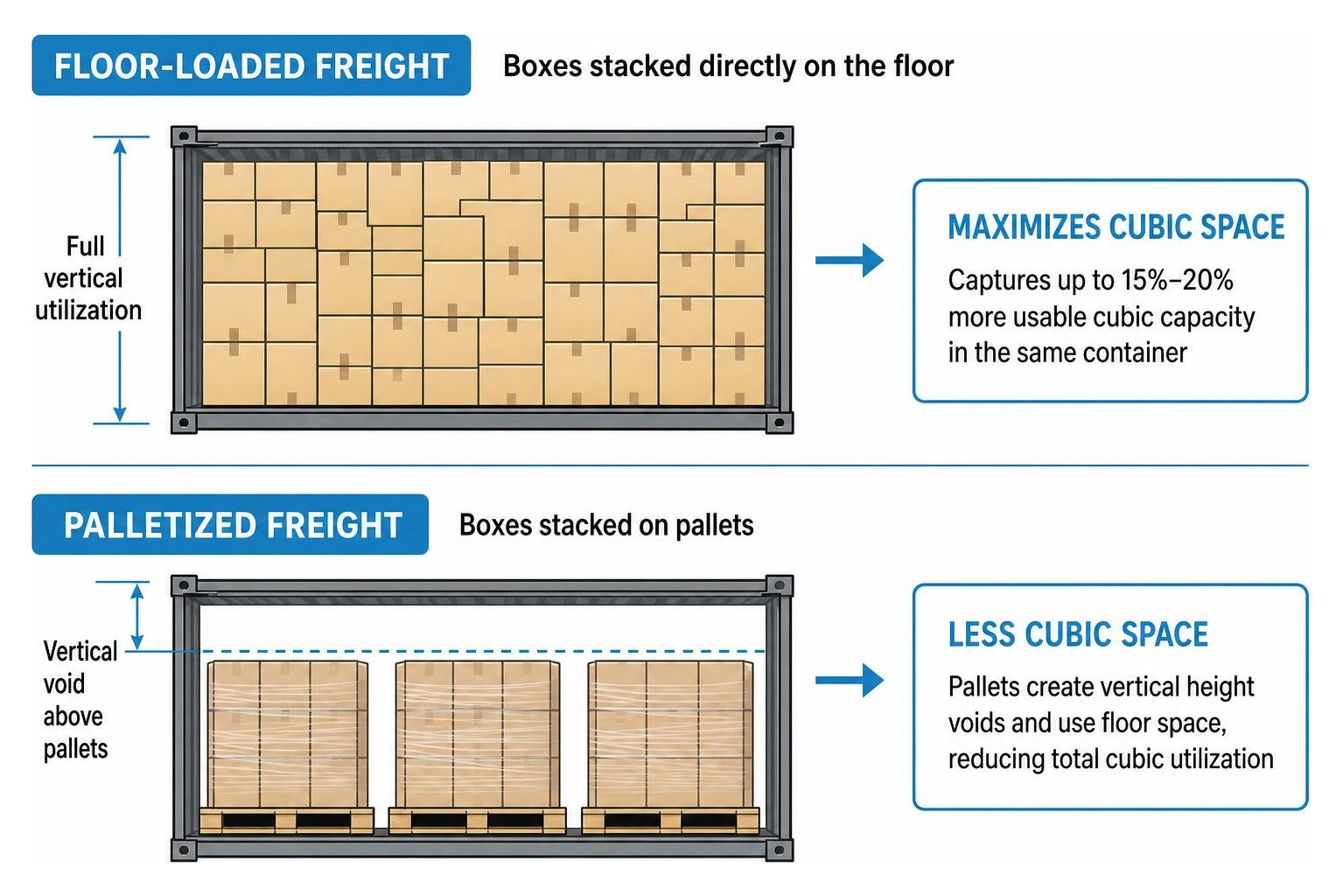
Floor-loaded freight involves placing individual cartons, parcels, bags, or loose industrial items directly onto the trailer floor and stacking them securely upward toward the ceiling. In contrast, palletized freight groups individual boxes or items onto standardized wooden or plastic platforms—typically 48″×40″ GMA (Grocery Manufacturers Association) pallets—secured with stretch wrap, steel or plastic banding, and corner boards.
The primary difference lies in the balance between
space utilization and
operational velocity. Because pallets introduce vertical height voids and consume physical floor space, floor loading can capture up to 15% to 20% more usable cubic capacity inside an identical 40-foot ocean container or 53-foot dry van. However, capturing that volume requires manual human handling, whereas palletized units move in seconds using mechanized forklifts, reach trucks, and electric pallet jacks.
(Handled through natural markdown table formatting below)
Core Mechanics of Floor Loading
Floor loading treats the entire interior envelope of the container as usable cargo space. Freight handlers manually position each carton or unit directly on the floor, starting against the front bulkhead (nose) and working backward toward the container doors in tight vertical rows.
- Space Maximization: By eliminating the typical 5.5-inch to 6-inch vertical clearance consumed by each wooden pallet—along with the structural safety margins required between stacked pallets—loose cargo can be tiered directly to the ceiling.
- Tare Weight Reduction: A standard hardwood pallet weighs between 35 and 50 lbs. A 53-foot dry van holding 26 to 30 pallets carries 900 to 1,500 lbs of dead platform weight. Floor loading removes this deadweight, allowing shippers to get closer to statutory road weight limits with pure payload.
- Staging and “Cargo Tetris”: Floor loading relies heavily on manual skill. Handlers must stage inventory by carton density, nesting irregular items and placing heavier parcels at the base to build interlocking tiers that resist transit vibrations and road sway.
Core Mechanics of Palletized Shipping
Palletization relies on standard unitization. Multiple cartons or bulk products are stacked onto a standardized pallet base, creating a single, cohesive unit of transport (often up to 48″ wide, 40″ long, and 48″ to 72″ high).
- Unitization and Stability: The load is locked to the wooden or composite pallet using multi-layer machine stretch wrap, adhesive slip sheets, and heavy-duty poly strapping. This creates a rigid cube that resists tipping and internal box shifts.
- Rapid Mechanized Transfer: Palletized cargo requires zero manual touchpoints for individual cartons. A single forklift operator can enter a trailer, lift a 2,000-lb unit, and stage it in an outbound cross-dock bay in under two minutes.
- Standardized Footprints: In North American trucking, 53-foot dry vans are designed to accommodate two standard pallets side-by-side (turned or straight), allowing for precise load planning of 26 to 30 pallets with predictable weight distribution.
What Are the Pros and Cons of Each Loading Method?
Deciding whether to floor-load or palletize requires balancing container shipping rates against labor costs, dock handling capacity, and product liability. Understanding these trade-offs helps supply chain managers protect operating margins and prevent dockside bottlenecks.
| Factor |
Floor-Loaded Freight |
Palletized Freight |
| Space Utilization |
Maximized (15–20% more cargo volume) |
Reduced by pallet dimensions and top clearance |
| Loading / Unloading Time |
3 to 5 hours (requires manual labor) |
30 to 45 minutes (forklift / pallet jack) |
| Workforce Requirement |
Multi-person lumper crew (2–4 workers) |
Single forklift operator |
| Material Costs |
Low (minimal pallets or shrink-wrap) |
Higher ($10–$25+ per pallet, film, banding) |
| Risk of Cargo Damage |
Higher (individual handling, top load pressure) |
Lower (cushioned, unitized, minimal handling) |
| Carrier Detention Risk |
High (frequent dwell times over free time) |
Low (rapid dock turnaround) |
| Receiver Acceptance |
Varies (often rejected by automated RDCs/FBA) |
Universally accepted across commercial docks |
Advantages and Drawbacks of Floor Loading
For high-volume international ocean shipping or bulk domestic movements, floor loading provides substantial savings on raw container volume:
Advantages
- Lower Shipping Cost Per Unit: By packing freight wall-to-wall and floor-to-ceiling, you move significantly more product per shipping container. Over dozens of ocean containers or long-haul domestic runs, this can eliminate every fifth or sixth trailer needed.
- Zero Packaging Platform Overhead: You avoid buying, leasing, storing, and disposing of wooden or plastic pallets, cutting out raw material costs and pallet-return logistics.
- Flexibility for Irregular Cargo: Durable, bulky, or non-cubed items (such as agricultural tires, carpet rolls, and heavy piping) naturally resist palletization. Floor loading accommodates these irregular profiles without wasting deck space.
Drawbacks
- Labor-Intensive Handling: Unloading an 800- to 2,000-carton floor-loaded 40-foot container is physically demanding. It requires a dedicated warehouse team or third-party lumper services, increasing dock labor costs.
- Extended Dwell and Detention Fees: Most truckload carriers grant two hours of complimentary loading/unloading time. Manual floor unloading frequently stretches to four hours or more, triggering carrier detention surcharges ranging from $50 to $75+ per hour.
- Elevated Crushing and Shift Hazards: If bottom cartons lack the structural stacking strength (ECT rating) to support the weight above them, they can buckle during transit. Loose boxes are also more vulnerable to sliding when drivers brake or negotiate tight turns.
Advantages and Drawbacks of Palletized Freight
Palletization remains the foundation of modern domestic distribution because it prioritizes workflow speed, predictability, and cargo protection.
Advantages
- Rapid Dock Turnaround: A 53-foot dry van carrying 26 pallets can be stripped, scanned, and cross-docked by a forklift operator in 30 to 45 minutes, keeping receiving docks clear and preventing detention fees.
- Enhanced Cargo Protection: Pallets keep products elevated off damp trailer floors and protect bottom cartons from road vibration. Unitizing boxes inside heavy stretch wrap and corner boards prevents individual cartons from slipping or crushing.
- Automated Warehouse Compatibility: Modern distribution hubs and high-bay racking systems require standard pallet dimensions for automated storage and retrieval systems (ASRS), barcode pallet tracking, and standard conveyor intake.
Drawbacks
- Lost Usable Volume: The wood base and top vertical clearance create unavoidable empty space. You pay to haul fresh air around the pallet perimeter and top deck.
- Packaging Material Costs: Sourcing quality Grade A wooden GMA pallets, stretch film, plastic strapping, and slip sheets adds material expenses to every outbound shipment.
- Product Overhang Inefficiencies: If non-standard cartons extend over the pallet edges, the cartons can crush during forklift handling. Conversely, under-hanging loads leave open gaps that reduce stability.
How Do Product Characteristics and Destination Rules Influence Your Decision?
Choosing the right loading method isn’t just about freight rates—it is fundamentally shaped by what you are shipping and who is receiving it. Matching the loading method to your product profile avoids costly dock refusals and transit claims.
Ideal Freight Profiles for Floor Loading
Floor loading delivers the best return on investment when shipping items with the following physical profiles:
- High-Density, Durable Goods: Products that are physically rugged and impervious to damage from manual handling or carton-on-carton contact. Examples include:
- Automotive and agricultural tires
- Industrial hoses and heavy rubber components
- Rolled carpets and commercial flooring
- Steel coils, piping, and metal tubing
- Industrial paper rolls and building lumber
- High-Cube, Lightweight Uniform Cartons: When moving low-weight, high-volume consumer goods (such as apparel, plush toys, or lightweight textiles), maximizing container volume is more cost-effective than managing pallet voids, provided the cartons have sufficient compression strength.
- Direct Import Ocean Containers: Overseas manufacturers frequently floor-load ocean containers because lower origin labor costs make manual packing practical, and maximizing ocean container volume offsets ocean freight rates.
Ideal Freight Profiles for Palletization
Palletized loading is essential for shipments requiring careful handling, structural protection, or high-speed receiving:
- Delicate or Fragile Cargo: Glassware, consumer electronics, lighting fixtures, ceramics, and boxed liquids. These items require structural unitization to isolate them from transit vibration, shifting, and manual drops.
- High-Value Consumer Goods: Expensive retail merchandise, cosmetics, and packaged pharmaceuticals benefit from palletization because intact shrink-wrap and security tape make tampering and cargo pilferage obvious.
- Automated Retail Inventory: High-velocity retail goods entering cross-dock hubs where cartons must move straight from the trailer onto conveyor belts or high-bay racking.
Receiver and Warehouse Requirements
Before tendering a shipment, verify the receiver’s dock capabilities and vendor routing guides. Major retailers and e-commerce distribution networks enforce strict inbound shipping requirements:
- E-Commerce Compliance (e.g., Amazon FBA): E-commerce fulfillment networks maintain rigid intake standards. For instance, Amazon FBA requires any carton weighing over 50 lbs to be palletized. Floor-loaded containers delivered to fulfillment facilities that lack specialized conveyor-assist unloading can lead to refused deliveries, long dock delays, or per-carton unloading penalty fees.
- Receiver Dock Limitations: If your customer’s facility does not maintain a dedicated lumper staff or unloading conveyors, sending a floor-loaded trailer forces their forklift operators to hand-unload every box onto pallets—straining relationships and generating hefty accessorial bills.
- Cross-Docking and Transloading Workflows: Shippers importing floor-loaded ocean containers through major maritime gateways often use regional warehousing hubs to strip incoming containers, sort cartons, and palletize the freight for domestic line-haul. Shippers managing multi-modal distribution across the lower 48 states can take advantage of nationwide freight and warehousing solutions to convert inbound floor loads into palletized outbound trailers ready for fast domestic cross-docking.
What Are the Cost, Efficiency, and Environmental Differences?
Evaluating the true cost difference between floor-loaded and palletized freight requires looking beyond baseline line-haul rates. Supply chain teams evaluate this choice through the
“Three W’s” framework:
Wastage,
Warehouse Setup, and
Workforce Capacity.
Labor and Equipment Cost Analysis
Operational costs vary widely between manual and mechanized handling:
- Labor Hours: Unloading a 53-foot floor-loaded trailer holding 1,200 loose cartons typically requires a three-person team working for 3.5 to 4 hours (totaling 10.5 to 12 labor hours). Unloading 26 palletized units from the same trailer requires a single forklift operator working for 35 minutes (less than 0.6 labor hours).
- Demurrage and Detention Risks: When floor-unloading exceeds the carrier’s standard two-hour free time, detention charges quickly erode any line-haul volume savings. If three containers dwell on a dock for three extra hours each day at $65/hour, demurrage and detention fees reach nearly $600 per day in avoidable penalties.
- Pallet Sourcing and Asset Management: Standard wood GMA pallets cost between $12 and $22 per new pallet, and rental options from pooled providers carry monthly lease fees and transfer administration costs. For high-volume shippers moving thousands of units per month, pallet purchasing represents a major line item.
Environmental Impact and Sustainability Trade-Offs
Both methods carry distinct environmental trade-offs:
- Packaging Material Footprint: Palletized shipments generate significant single-use plastic waste, including miles of linear polyethylene stretch wrap, corner edge protectors, and non-recyclable composite strapping. Floor-loaded shipments dramatically cut packaging materials, producing cleaner dockside waste streams.
- Transportation Carbon Intensity: Because floor loading allows you to pack 15% to 20% more product into each trailer, fewer total truck trips are needed to move the same aggregate volume of goods. This higher payload efficiency directly reduces diesel fuel consumption and line-haul greenhouse gas emissions per ton-mile.
- Pallet Lifecycle Dynamics: While wooden pallets are repairable, millions end up discarded in industrial waste streams annually. Transitioning to durable, closed-loop plastic pallet pools helps mitigate waste, though it introduces empty pallet reverse-logistics requirements.
How Can You Secure Cargo and Combine Methods for Maximum Efficiency?
Securing floor-loaded freight requires disciplined securement to protect cargo integrity and maintain highway axle compliance. Combining both approaches within a single trailer can also help capture the strengths of each method.
Best Practices for Securing Floor-Loaded Shipments
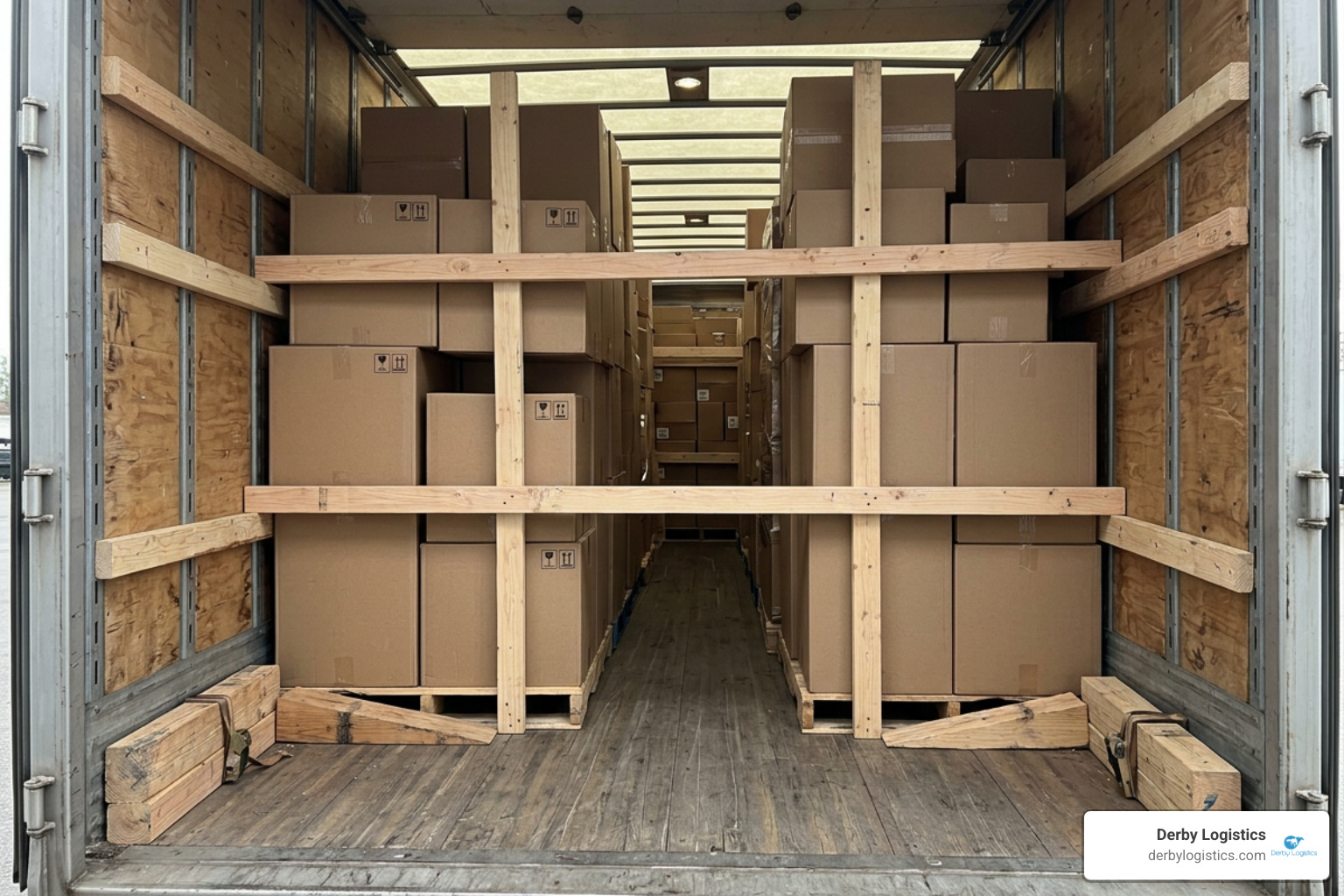
Because floor-loaded cargo lacks the unified structural support of stretch-wrapped pallets, improper blocking and bracing can cause cargo to shift forward, backward, or laterally during transit.
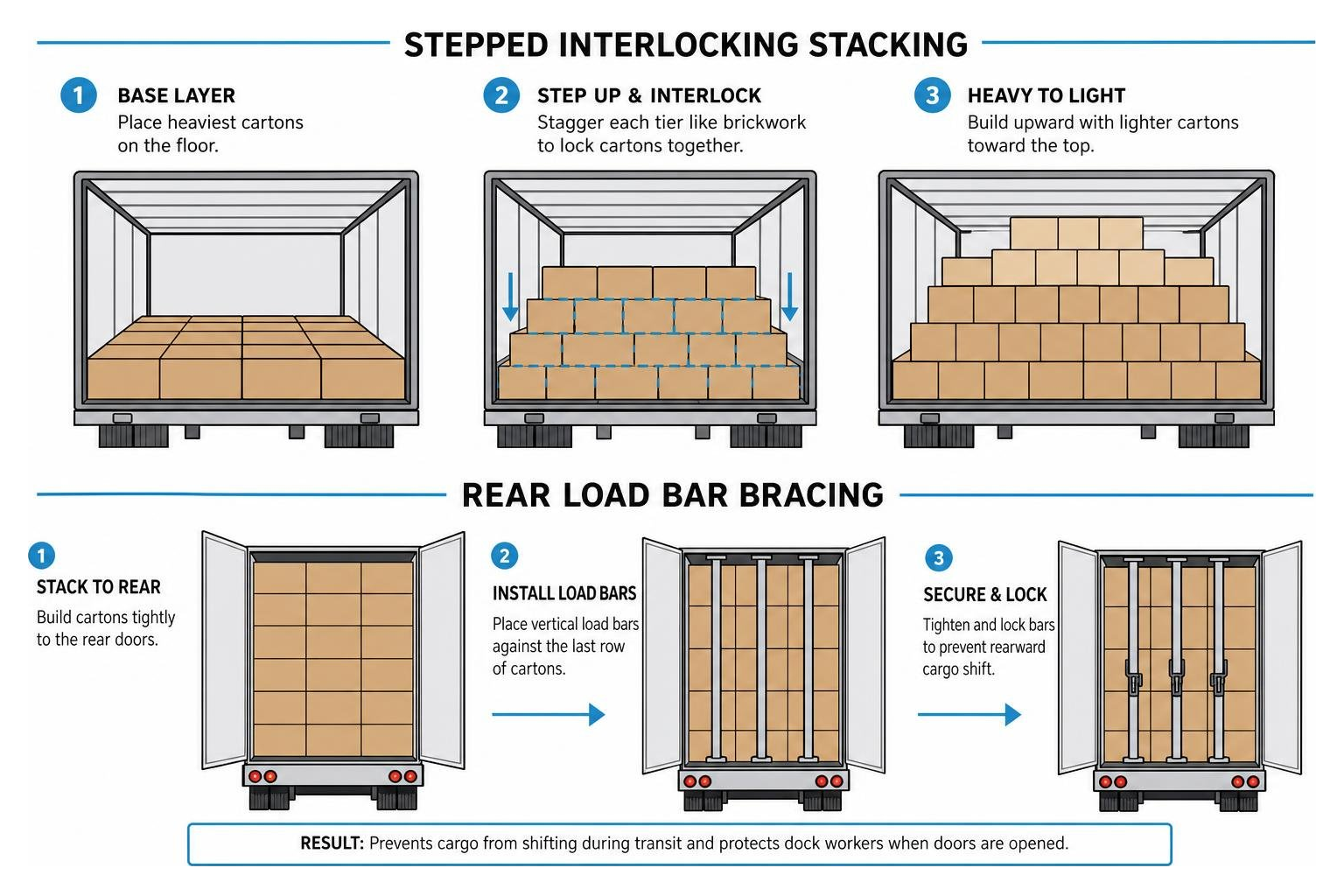
- Apply the Heavy-to-Light Rule: Always place your densest, heaviest cartons on the trailer floor. Lighter cartons should be tiered upward. Never place rigid metal or heavy consumer goods on top of corrugated boxes.
- Step-Down Interlocking Tiers: Build staggered, interlocking carton rows resembling brickwork. This distributes downward and lateral pressure across multiple cartons rather than concentrating stress along a single vertical seam.
- Deploy High-Pressure Dunnage Air Bags: Fill lateral voids between box walls and trailer ribs using inflatable kraft-paper or poly dunnage air bags. This prevents side-to-side shifting when the truck maneuvers along highway curves.
- Install Rear Gate Bracing: Secure the final row of freight closest to the rear doors using heavy-duty vertical load lock bars, ratchet straps attached to the trailer’s internal logistic tracks, or anchored wooden 2×4 blocking. This prevents cargo from shifting against the rear swing doors and falling onto dock workers when the trailer is opened.
Executing Hybrid Load Configurations
You do not always have to choose exclusively between pure floor loading or pure palletizing. Hybrid load configurations allow shippers to balance space optimization with dock handling speed.
- Nose-Loaded Pallets with Rear Floor Loading: Position heavy, fragile, or standard-dimension palletized goods in the forward section (nose) of the trailer to ensure rapid forklift staging at initial delivery stops. Use the rear trailer area for durable, floor-loaded bulk cartons or oversized items that can be hand-unloaded without disrupting forward pallets.
- Topping Off (Deck Spanning): When palletized freight does not reach the trailer ceiling, you can place lightweight, durable boxed items (such as empty display units, foam padding, or textile packs) on top of the stretch-wrapped pallets. This captures unused vertical cubic space without exceeding pallet weight ratings.
- Managing Federal Axle Weight Limits: When mixing methods, monitor weight distribution across the steer, drive, and trailer tandem axles to comply with Federal Bridge Gross Weight formulas. Concentrating heavy floor-stacked items in the center or nose of a trailer can easily overload an axle group, even if the gross trailer weight remains well below 80,000 lbs.
Frequently Asked Questions About Freight Loading Methods
Can you combine floor-loaded and palletized freight in a single trailer?
Yes. Shippers frequently use hybrid load strategies to maximize trailer space. When mixing loading methods, place palletized freight in the front nose section of the trailer and floor-stack loose or irregular freight behind it, or use floor-loaded lightweight cartons to fill empty overhead space above pallets. Always use load-separating bulkheads, dunnage air bags, and ratchet straps to keep loose items from sliding into palletized units during transit.
Why do overseas ocean containers frequently arrive floor-loaded?
Ocean freight rates are charged per container rather than per pound. Overseas factories—particularly across Asia and Europe—often floor-load shipping containers to maximize cubic space and avoid paying for empty voids. In many foreign manufacturing hubs, lower dock labor costs make manual hand-stacking economical. Once containers arrive at U.S. ports, these floor loads are commonly transferred to domestic cross-docks, where transloading crews palletize the inventory for final-mile delivery.
How long does it typically take to unload a floor-loaded container compared to a palletized one?
Unloading a standard 40-foot or 53-foot floor-loaded container containing 800 to 1,500 individual loose cartons typically takes a two- to four-person lumper crew between 3 and 5 hours. In contrast, an experienced forklift operator can unload a fully palletized container carrying 24 to 26 standard GMA pallets in 30 to 45 minutes.
Conclusion
Choosing between floor-loaded and palletized shipping comes down to a clear operational trade-off:
maximum volume efficiency versus rapid handling and cargo protection.
- Choose floor loading when your cargo is durable, irregularly shaped, or dense, and when shipping costs make maximizing container volume your top priority.
- Choose palletizing when shipping fragile, high-value, or standardized carton freight that requires gentle handling, rapid forklift unloading, and full compliance with automated retailer distribution centers.
When planning your upcoming shipments, evaluate your product characteristics, calculate total handling and detention costs, and review your receiver’s dock requirements.
At Derby Logistics, we help businesses across the lower 48 states navigate complex freight handling, full-truckload transportation, cross-dock transfers, and ocean container transloading. Contact our freight operations team today to evaluate your shipping profile and build an efficient, cost-effective distribution strategy.

